How to Plan a Wedding Budget: A Simple Category-by-Category Breakdown
Most couples don’t overspend because of one big purchase. They overspend because of dozens of small ones that were never in the plan. A wedding budget works when every euro has a job before you book anything.
Step 1: Decide your total number first
Start with what you can actually spend, not what the average wedding costs. Add up three things:
- What you have saved today
- What you can realistically save each month until the wedding
- Any confirmed contributions from family (only count money that has been promised)
Then keep 5-10% aside as a buffer. Almost every wedding has surprise costs: extra guests, delivery fees, alterations, service charges.
Step 2: Split the total into categories
There is no correct split - it depends on what matters to you. The table below is a common starting point that you can adjust (or use our free wedding budget calculator):
| Category | Typical share | Notes |
|---|---|---|
| Venue + food & drinks | 40-50% | Usually the biggest cost; driven by guest count |
| Photo & video | 10-15% | Book early - good photographers fill up fast |
| Attire & beauty | 7-10% | Include alterations, shoes and hair trial |
| Flowers & decor | 7-10% | Reuse ceremony flowers at the reception |
| Music & entertainment | 5-8% | DJ, band, sound for the ceremony |
| Stationery, rings, transport, favors | 5-10% | Small items that add up |
| Buffer | 5-10% | Don’t skip this one |
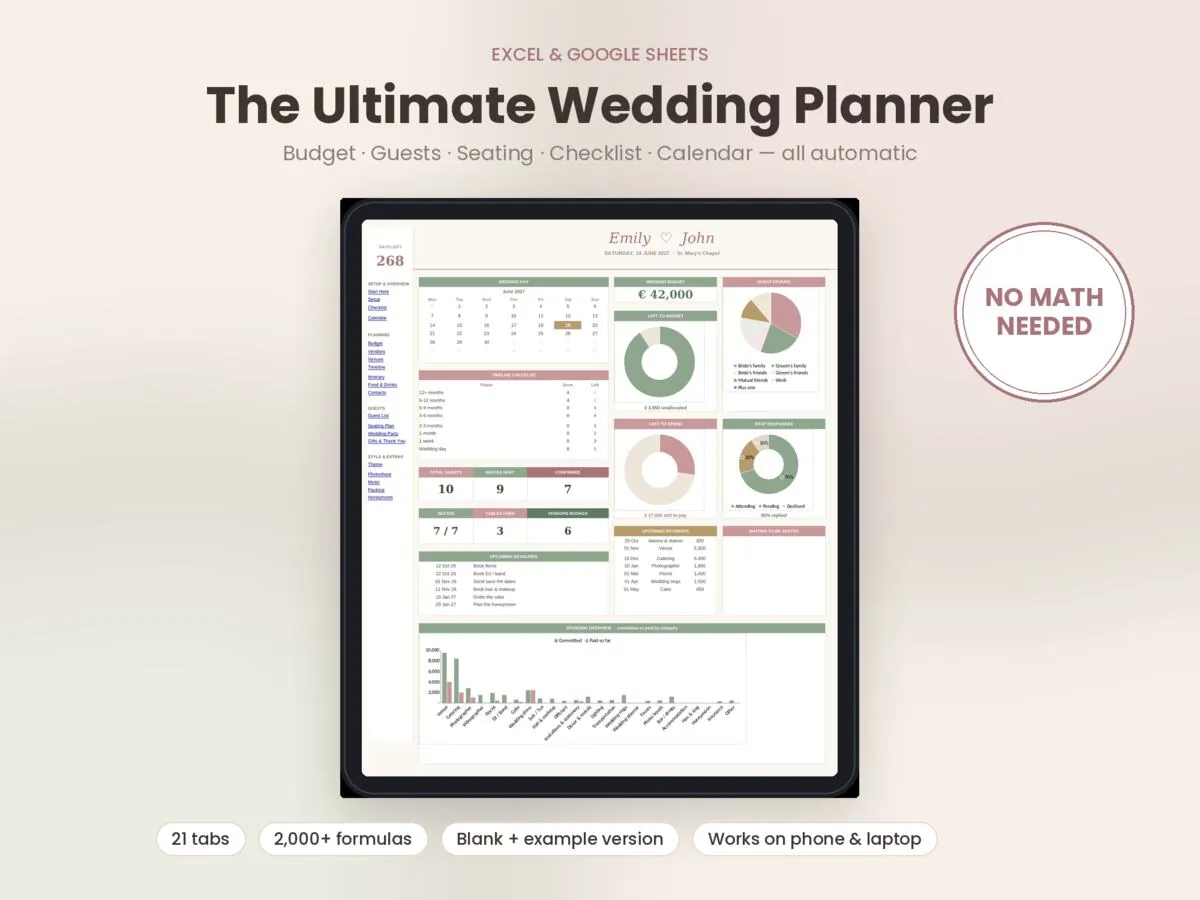
The Ultimate Wedding Planner
21 auto-calculating tabs: dashboard, budget, vendors, guests, seating, checklist, calendar and more.
See the Spreadsheet for €18Step 3: Track three numbers per category
For every category, write down:
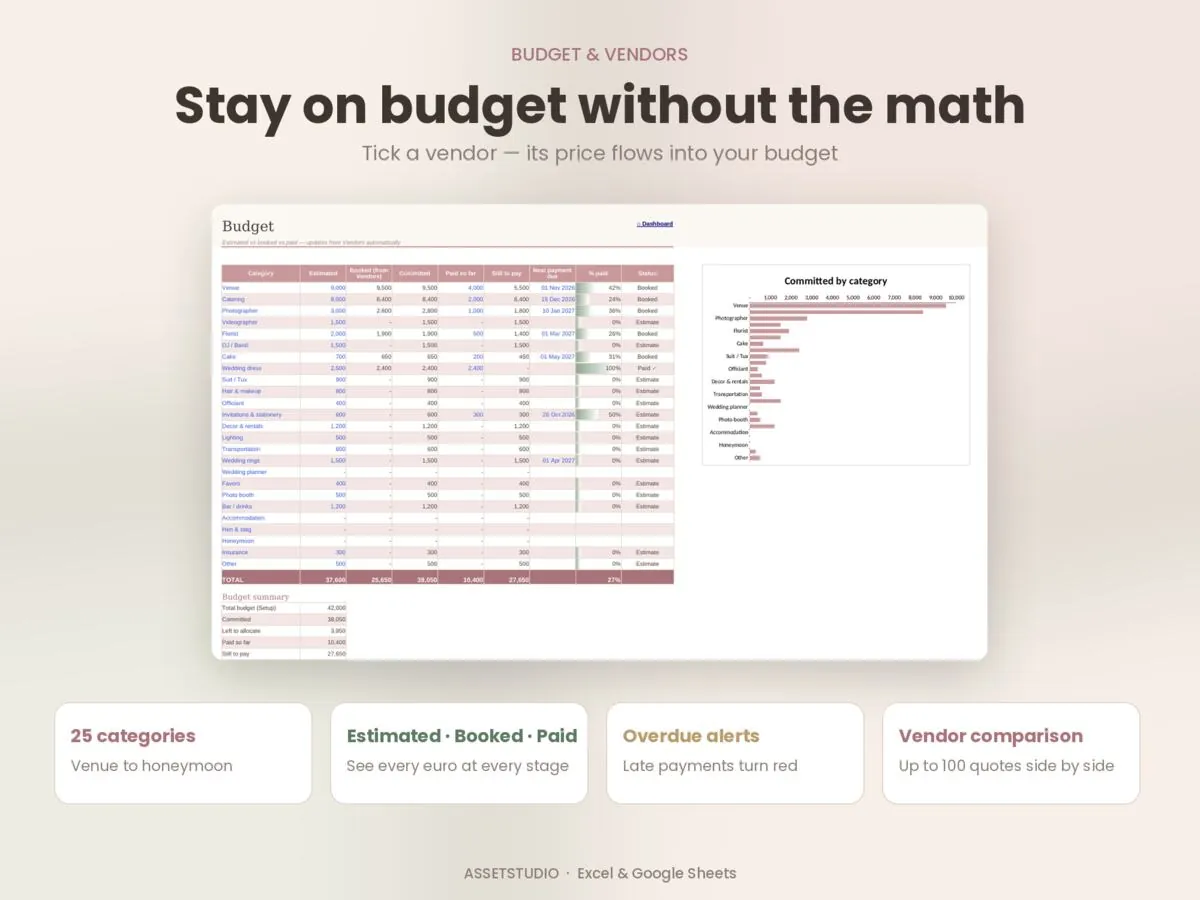
- Estimated - what you planned to spend
- Booked - the price in your signed quote
- Paid - deposits and payments already made
The difference between “booked” and “paid” is what you still owe. Add the due date of every payment so nothing surprises you in the final month.
Step 4: Compare at least three quotes
Put quotes side by side and check what’s included: hours, travel, service charge, VAT, overtime, setup and cleanup. The cheapest quote often isn’t the cheapest once extras are added.
Step 5: Review your budget monthly
Once a month, update what you’ve paid and what’s still due. If one category goes over, decide immediately which other category gives up the difference.
Quick wedding budget checklist
- Total budget agreed with your partner (and family, if contributing)
- 5-10% buffer set aside
- Guest list draft done before booking the venue
- Category split written down
- Three quotes collected for big items
- All payment due dates in one calendar
- Monthly budget review scheduled
FAQ
Many planners suggest 5-10% of your total budget for unexpected costs such as extra guests, fees and alterations.
For most weddings it’s the venue plus food and drinks, because it grows with every guest.
Use a spreadsheet with estimated, booked and paid amounts per category, plus due dates for every payment.