Wedding Seating Chart: 9 Tips to Seat Guests Without the Drama
The seating chart is often the last big job before the wedding - and the one couples dread most. A simple system makes it a one-evening task instead of a week of stress.
When to start
Start once most RSVPs are in, usually 3-4 weeks before the wedding. Finish it about a week before so your venue and stationer have final numbers.
9 tips that make it easier
- Group guests first, then tables. Tag each guest (bride’s family, groom’s friends, work, mutual friends) before placing anyone.
- Place the head table and family tables first. Everything else fits around them.
- Seat people with someone they know. Every guest should know at least one or two people at their table.
- Handle sensitive situations early. Divorced parents or family tensions? Give each side its own well-placed table rather than hoping for the best.
- Mix ages thoughtfully. Older guests away from speakers, families with kids near exits.
- Don’t forget dietary needs. Note allergies and meal choices next to each name for the caterer.
- Keep a “waiting to be seated” list. Late RSVPs go here until they have a table.
- Check the numbers per table. Round tables of 8-10 are common; confirm with your venue.
- Send the final version everywhere. Venue, caterer and whoever prints the seating chart.
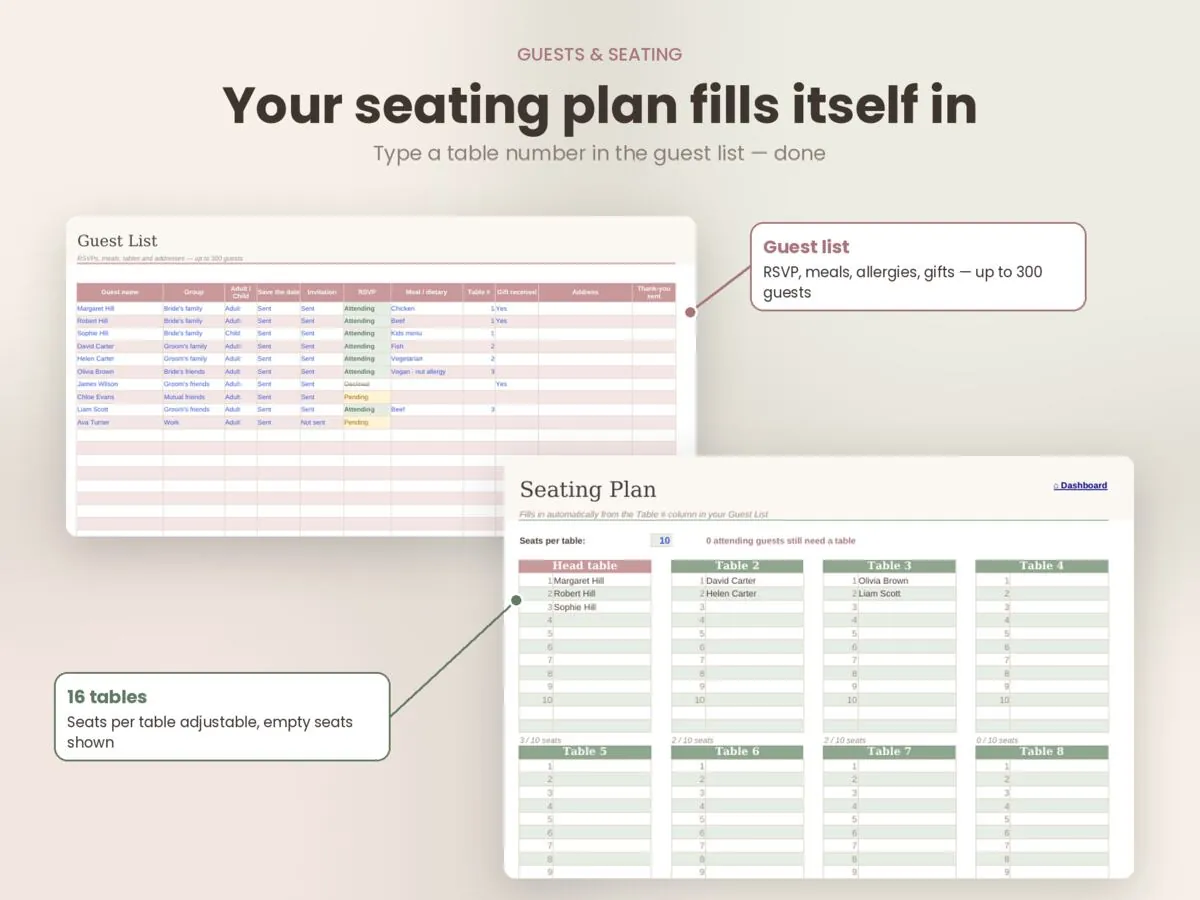
Pro tip: keep the guest list and seating plan connected. When you add a table number to a guest, the plan should update itself - no copying names between two documents.
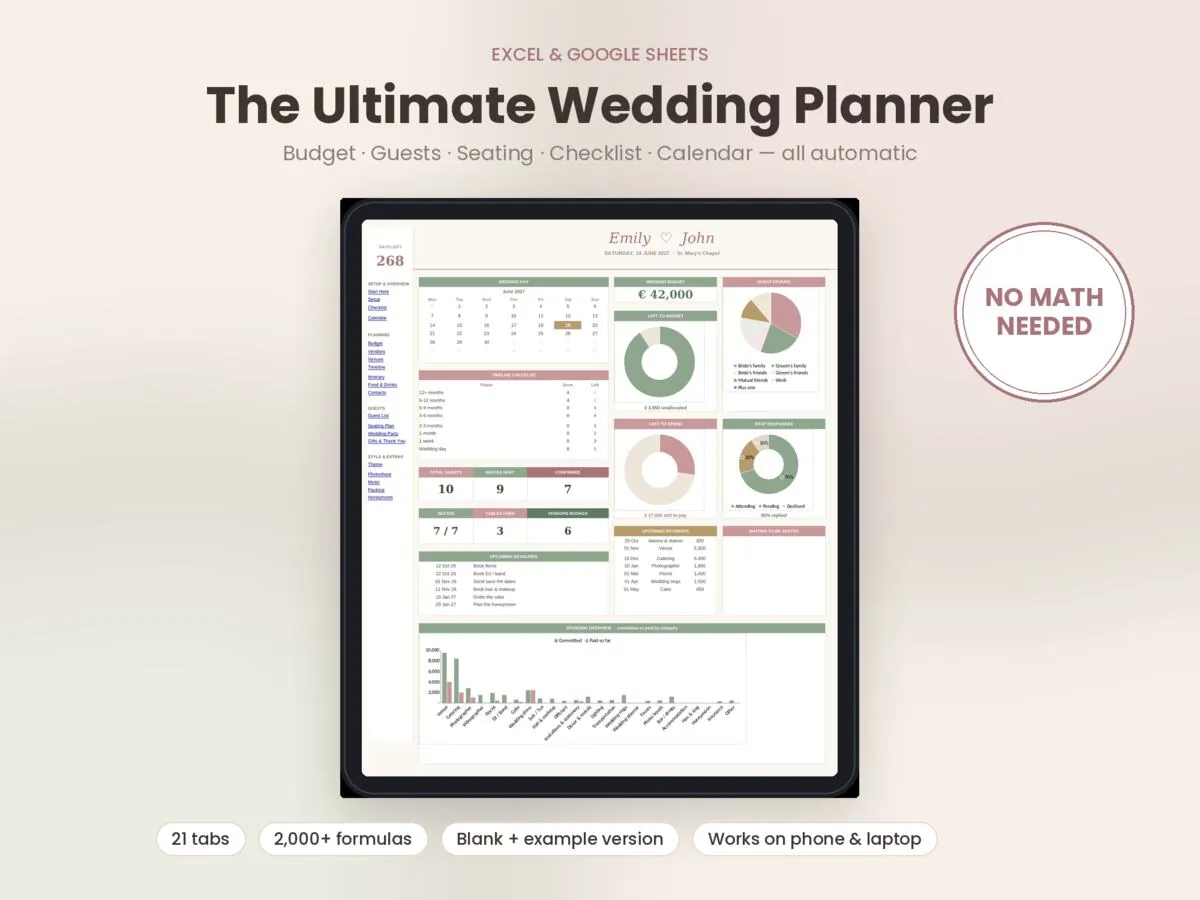
The Ultimate Wedding Planner
21 auto-calculating tabs: dashboard, budget, vendors, guests, seating, checklist, calendar and more.
See the Spreadsheet for €18FAQ
Round tables commonly seat 8-10 guests, but it depends on table size and venue layout - always confirm with your venue.
For very small weddings it’s optional, but assigned tables often make dinner service smoother and help guests feel looked after.